
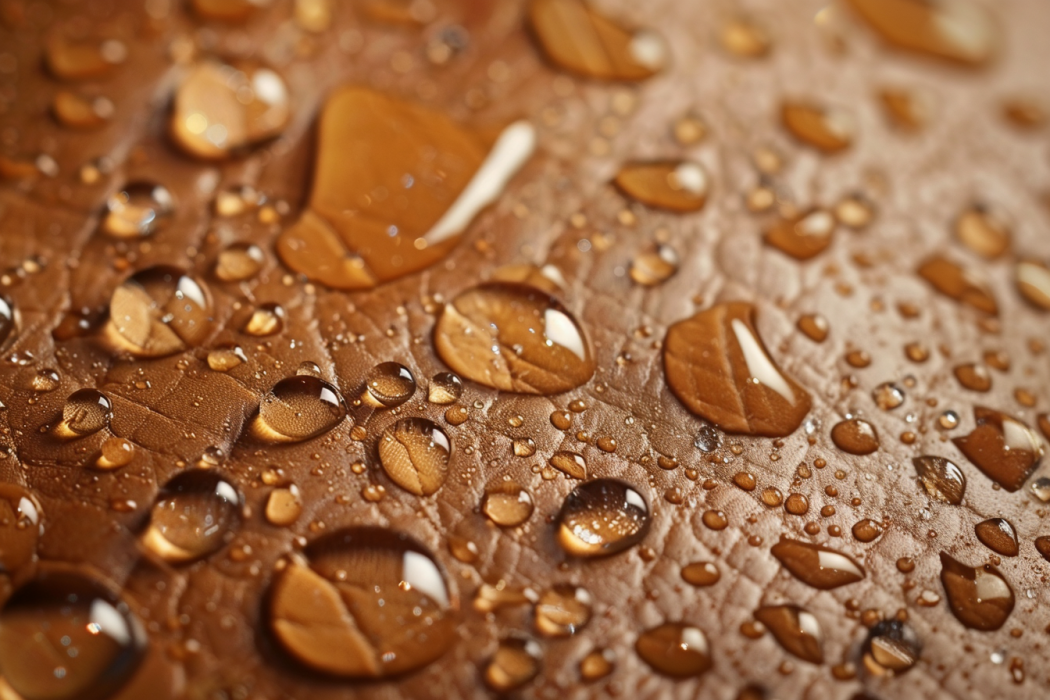
Water is one of natural leather’s biggest enemies. For everyday use, it’s worth understanding how moisture affects leather and how to protect it effectively.
In this article we answer:
- Why is water a problem for natural leather? Because absorbing moisture makes fibres swell and then contract as they dry — which can lead to deformation, cracking and loss of colour.
- There are several methods to protect leather against water: using dedicated protectors, finishing coats and regular conditioning with creams and balms.
- The most popular finishes and products not only repel water but also protect against dirt and everyday wear. Below we explain which preparations work best and when to use them.
- Caring for leather exposed to moisture should also include regular conditioning — using appropriate creams and balms that nourish and restore elasticity.
Why is water a problem for natural leather?
Natural leather, prized for its durability and refined look, has its weaknesses — and one of the biggest is sensitivity to moisture.
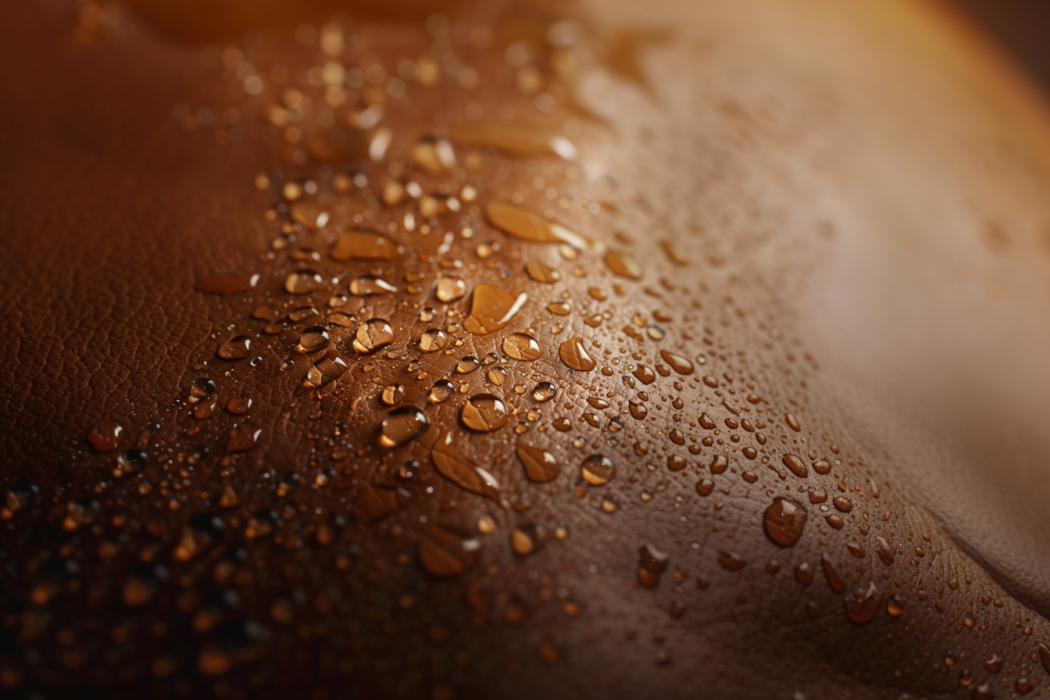
How leather absorbs water
Natural leather has a porous structure that allows moisture to penetrate. That’s why it is particularly prone to absorbing humidity. When water soaks in, the leather swells — and once dry, it may shrink unevenly, causing deformation.
Long‑term effects on leather
Cracks most often appear in areas of frequent bending, such as shoe flex points or bag folds. Deformation can change the silhouette and reduce comfort.
The importance of proper care
By taking preventative steps — waterproofing and regular conditioning — you significantly reduce the risk of damage and extend the life of leather goods.
The best ways to protect leather from water
Impregnation products — what to choose and how they work
- Wax‑based preparations
- Wax creates a protective layer that reduces water absorption and protects against dirt. It also gives a subtle sheen.
- How to apply? Apply a thin, even layer with a soft cloth, then buff gently. Don’t over‑apply — excess can clog pores.
- Precautions: on light leathers, wax may slightly darken the surface — always do a patch test first.
- Oil‑based preparations
These penetrate deep into the leather, restoring softness and elasticity. They work well for drier leathers that need nourishment.
How to apply? Spread a small amount evenly and allow it to absorb fully before buffing.
Examples: neatsfoot oil (traditionally used in equestrian leather), or specially formulated leather oils for garments and accessories.
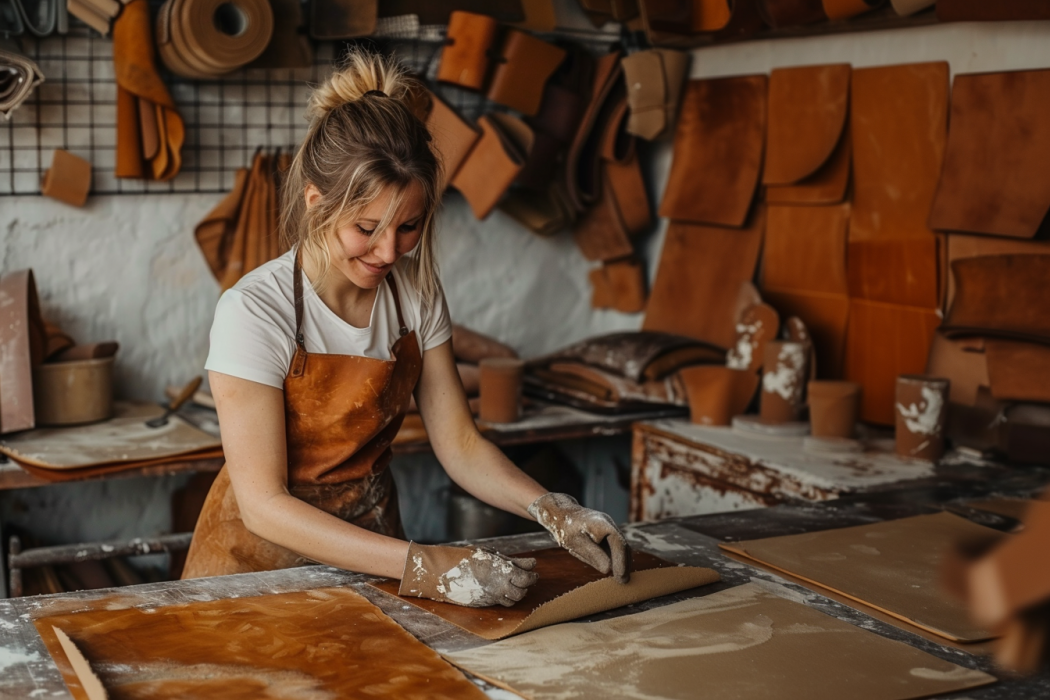
Modern polymer coatings create an invisible, flexible barrier that repels water without stiffening the leather.
How to apply? Usually as a spray — keep the recommended distance and apply in a thin, even coat.
Silicone‑based preparations
Silicone forms a protective film on the surface and effectively repels moisture — recommended for conditions with high exposure to wet weather.

Silicone‑based products
Silicone creates a thin film on the surface that repels water for a long time. It works especially well when the leather is particularly exposed to moisture.
Application techniques for waterproofing products
The effectiveness of protectors depends not only on the product itself but also on how you use it: apply on clean, dry leather; work in thin layers; let each coat set before applying the next.
Protecting leather from water is an investment in its longevity. With regular care and the right products, you’ll enjoy your leather’s look without worrying about damage or premature ageing.
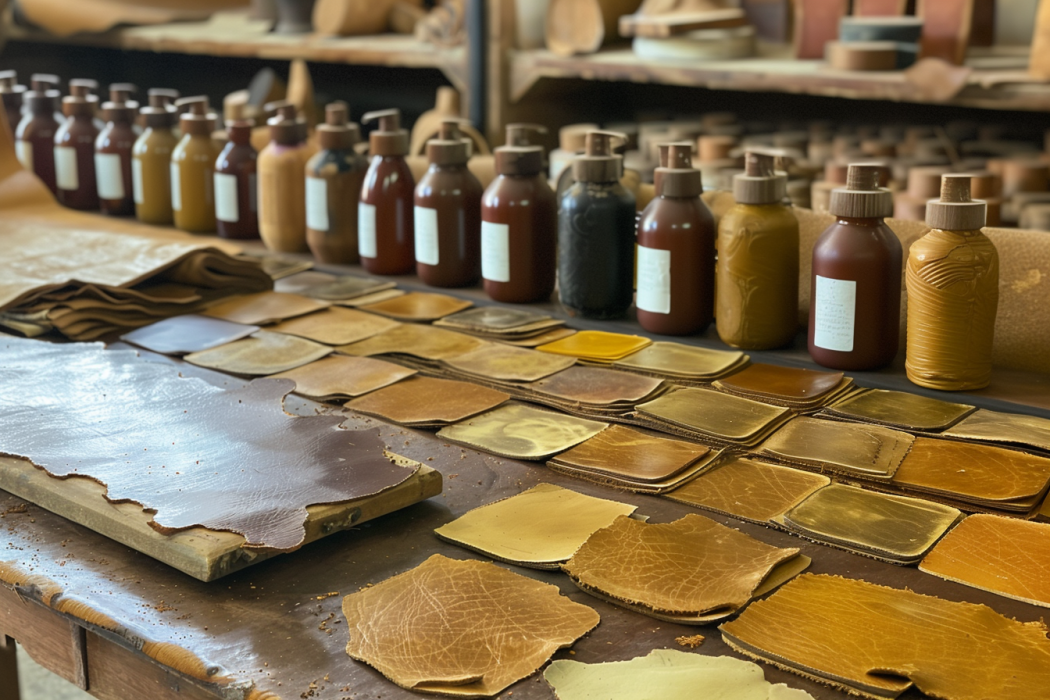
Najpopularniejsze lakiery i preparaty do skór
Ochrona skóry naturalnej przed wodą jest kluczowym aspektem jej pielęgnacji, szczególnie jeśli chcemy zachować jej trwałość i estetyczny wygląd przez wiele lat. Na rynku dostępnych jest wiele produktów, które mogą zapewnić skuteczną barierę ochronną przed wilgocią, ale ważne jest, aby wybrać te najbardziej odpowiednie dla naszych potrzeb. W tej sekcji omówimy szczegółowo różne rodzaje lakierów i preparatów do skór, które można znaleźć w ofercie Skóral, wskazując ich specyfikacje, zalety oraz metodę aplikacji.
1. Lakiery na bazie wodnej
Lakiery na bazie wodnej to popularny wybór wśród użytkowników skór naturalnych. Są one mniej szkodliwe dla środowiska i bezpieczne w użyciu dzięki brakowi silnych rozpuszczalników. Takie lakiery tworzą cienką, ale odporną powłokę na powierzchni skóry, która chroni przed wodą, a także przed brudem i innymi zanieczyszczeniami.
2. Lakiery silikonowe
Lakiery silikonowe są znane z doskonałych właściwości hydrofobowych. Tworzą na skórze elastyczną warstwę, która nie tylko chroni przed wodą, ale także pozwala skórze oddychać. Są to preparaty idealne do skór używanych na zewnątrz, np. w kurtkach czy butach outdoorowych.
3. Lakiery akrylowe
Lakiery akrylowe to kolejna opcja dla tych, którzy potrzebują silniejszej ochrony. Są odporne na ścieranie i działanie UV, co czyni je odpowiednimi do skór eksploatowanych w trudnych warunkach. Lakiery te mogą również poprawić wygląd skóry, nadając jej połysk i intensyfikując kolor.
Przykładowy produkt:
- AcrylFinish: Lakier akrylowy o wysokim połysku. AcrylFinish jest idealny do odnawiania starych skór, przywracając im dawny blask.
Jak stosować lakiery i preparaty do skór?
Aplikacja lakierów i preparatów ochronnych wymaga staranności. Oto kroki, które warto stosować, aby efekt był jak najlepszy:
- Czyszczenie skóry – przed nałożeniem preparatu, skóra musi być czysta i sucha.
- Test na niewidocznej części – zawsze przeprowadź test na małej, mniej widocznej części skóry, aby upewnić się, że produkt nie zmieni koloru ani tekstury materiału.
- Aplikacja – użyj miękkiej szmatki lub gąbki do równomiernego nałożenia produktu. W przypadku sprayów trzymaj pojemnik w odpowiedniej odległości, zazwyczaj około 20 cm od powierzchni skóry.
- Czas schnięcia – po nałożeniu produktu, pozostaw skórę do wyschnięcia w temperaturze pokojowej, z dala od bezpośrednich źródeł ciepła.
Stosując te wskazówki i wybierając odpowiednie preparaty z oferty Skóral, można znacząco wydłużyć życie i poprawić wygląd każdego wyrobu ze skóry naturalnej. Zapraszamy do odwiedzenia naszego sklepu sklep.skoral.com, gdzie znajdą Państwo szeroki asortyment produktów skórzanych.
Jak dbać o skórę narażoną na kontakt z wodą?
Skóra naturalna jest niezwykle ceniona za swoją trwałość i estetykę, ale niewłaściwa pielęgnacja, zwłaszcza gdy jest narażona na wilgoć, może szybko przyczynić się do jej zniszczenia. Dlatego tak ważne jest, aby stosować odpowiednie techniki konserwacji, które nie tylko zapobiegną jej uszkodzeniom, ale także przedłużą jej życie i zachowają naturalne piękno.
Regularne czyszczenie
Zacznijmy od podstaw: regularne czyszczenie jest kluczowe. Zabrudzenia i sól, które mogą osadzać się na skórze w kontakcie z wodą, jeśli nie zostaną szybko usunięte, mogą prowadzić do trwałych plam i uszkodzeń.
- Zastosowanie odpowiedniego środka czyszczącego: Użyj środka przeznaczonego specjalnie dla skóry naturalnej – żel do pielęgnacji skóry. Jest delikatny, ale skutecznie usuwa brud i sól, nie naruszając struktury skóry.
Szczególnie zalecamy regularne czyszczenie skórzanych butów oraz mat skórzanych na biurko, które stykają się z dłońmi i innymi przedmiotami regularnie.
Impregnacja skóry naturalnej
Po każdym czyszczeniu skóra powinna być odpowiednio zaimpregnowana, aby zminimalizować przyszłe absorpcje wody.
- Use protector regularly: Choose a product that matches the leather type. Apply at intervals suited to wear and weather.
Avoid prolonged soaking
Prolonged soaking is one of the surest ways to damage leather. Try to avoid getting leather completely wet.
- Tip: If your leather shoes or accessories get soaked, dry them as soon as possible. For shoes, fill with paper to help absorb moisture and keep shape.
Store in the right conditions
Storage conditions have a big impact on leather care. High humidity and poor ventilation can encourage mould and mustiness.
- Storage: Ensure the space is dry, cool and ventilated. Use breathable covers; avoid plastic bags.
Regular use of conditioning creams
Conditioning creams are an excellent way to maintain elasticity and overall leather condition. They nourish, protect and improve appearance.
- Care creams: Choose dedicated products designed for natural leather garments and accessories.
Summary
Regular, proper care is the best investment in the durability and refined look of natural leather — protect it from water and it will serve you for years.


